
How often should air ducts be cleaned? The short answer: when they need it, not on a calendar. The EPA’s guidance on duct cleaning says it does not recommend routine cleaning, only cleaning as needed, and it lists three clear triggers: visible mold inside the ducts or on other parts of the system, a pest infestation, and ducts clogged with excessive dust and debris. For many homes in metro Atlanta that works out to an inspection every few years and a cleaning when the inspection, a life event or your own eyes say so. Below is how to tell the difference, what a proper cleaning includes, and how to spot the companies you should hang up on.
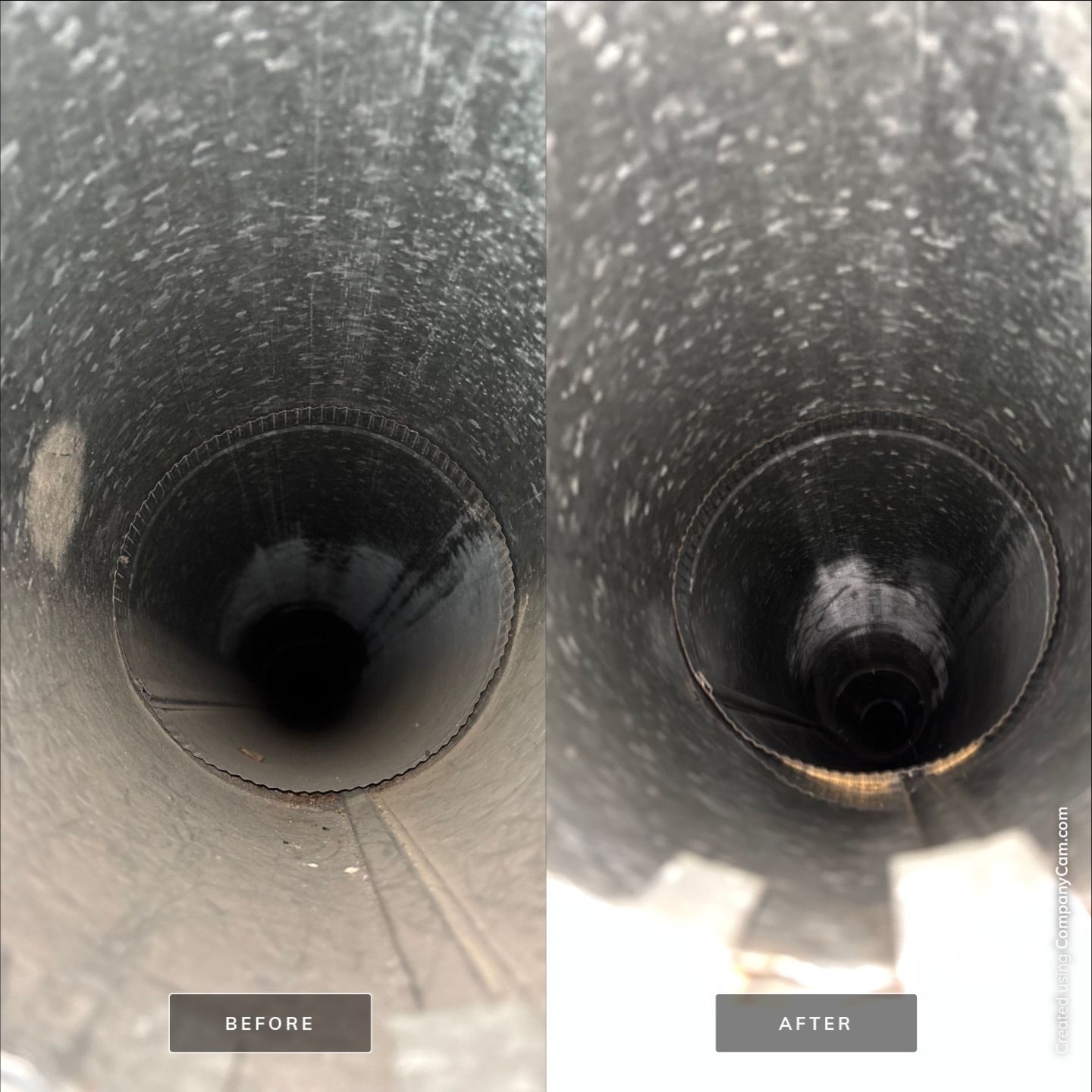
What the EPA actually says, in plain terms
The EPA’s position is often misquoted in both directions. It does not say duct cleaning is useless, and it does not say everyone needs it every three years. It says:
- Consider cleaning if there is substantial visible mold growth inside hard-surface ducts or on other components, confirmed by an expert, and fix the moisture source or the mold will return.
- Consider cleaning if ducts are infested with rodents or insects.
- Consider cleaning if ducts are clogged with excessive dust and debris, or if particles are actually being released into the home from the registers.
- Be wary of anyone who makes sweeping health claims or recommends cleaning as routine maintenance.
- Get written estimates, ask the company to show you the contamination, and confirm they follow NADCA standards.
That last point is the useful one. The question is not “how often” in the abstract. It is “what is in my ducts right now?” A camera inspection answers that in twenty minutes.
How often should air ducts be cleaned? Seven signs yours are due
- Dust puffs out when the system starts. Hold a flashlight at a supply register when the blower kicks on. Visible particles in the beam mean the duct is shedding what it has collected.
- Dark streaks on the ceiling or wall around registers. Those “ghosting” marks are fine particles being blown out and sticking to the surface.
- You just finished a renovation. Drywall dust is the number one thing we pull out of ducts in newer Alpharetta and Cumming homes. If registers were not sealed during the work, the ducts are full of it.
- You moved into a home with unknown history. Previous owners with pets, smokers or a long-ago flood leave their record inside the ductwork.
- A musty smell when the air comes on. This points to moisture somewhere in the system: a condensate pan, a coil, a duct run through a damp crawl space. Mold has to be confirmed by a professional, and the moisture problem has to be fixed first.
- Evidence of pests. Droppings, nesting material or chewed insulation near the air handler or in the attic. Rodents love the warmth of ductwork.
- After a fire, smoke event or water loss. Soot travels through the return and coats every supply run. Water in a slab duct or a flooded basement means the ducts need to be dried and cleaned as part of the water damage restoration or fire damage restoration.
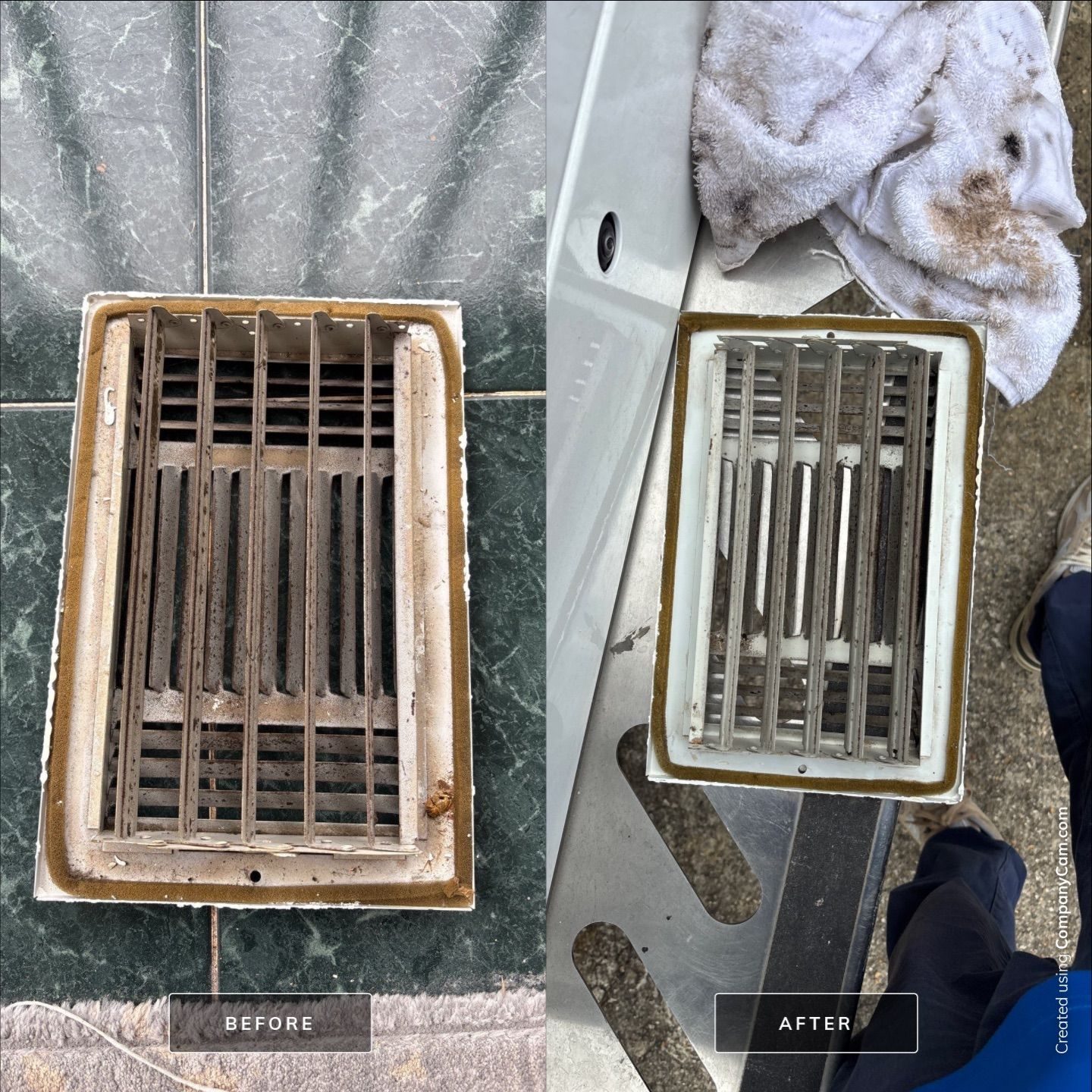
Is air duct cleaning worth it? Three honest scenarios
Worth it
Your ducts show real buildup on camera, you have allergy or asthma sufferers at home, the system has been running through construction, or there has been a water, fire or pest event. Removing the reservoir of dust, dander, pollen and debris means the system stops redistributing it every cycle. Many customers also notice stronger airflow at registers that were partly choked.
Not worth it
The ducts are clean on inspection and someone is selling a “special.” Cleaning clean ducts does nothing, and the very low-priced phone offers usually turn into pressure for add-ons once the crew is in your house. The EPA notes that it does not certify duct cleaners, so any company claiming EPA certification is misleading you.
Worth it only with other fixes
A dusty house with clean ducts has a different problem: leaky return ducts pulling in attic or crawl space air, a filter that is the wrong size or rating, or humidity that keeps dust clinging to surfaces. Cleaning alone will disappoint you. Sealing the returns and upgrading the filter will not.
What a proper duct cleaning includes
The industry standard is source removal: physically agitating debris loose and pulling it out under negative pressure, so nothing is pushed deeper into the system or into your rooms. A complete job covers:
- Inspection with a camera before and after, so you can see the result
- Supply and return trunk lines and every branch run
- Registers, grilles and the boots behind them
- Supply and return plenums
- The blower assembly and housing
- The evaporator coil and drain pan, where most odor problems live
- Sealing of access openings with sheet-metal patches and mastic
- A new filter
If a company only vacuums the registers with a shop vac and sprays something fragrant, that is not duct cleaning. Our NADCA-certified technicians follow the NADCA ACR standard, and when sanitizing is appropriate after mold or smoke we use botanical antimicrobials. The product details are on the Bioesque botanical disinfectant page.
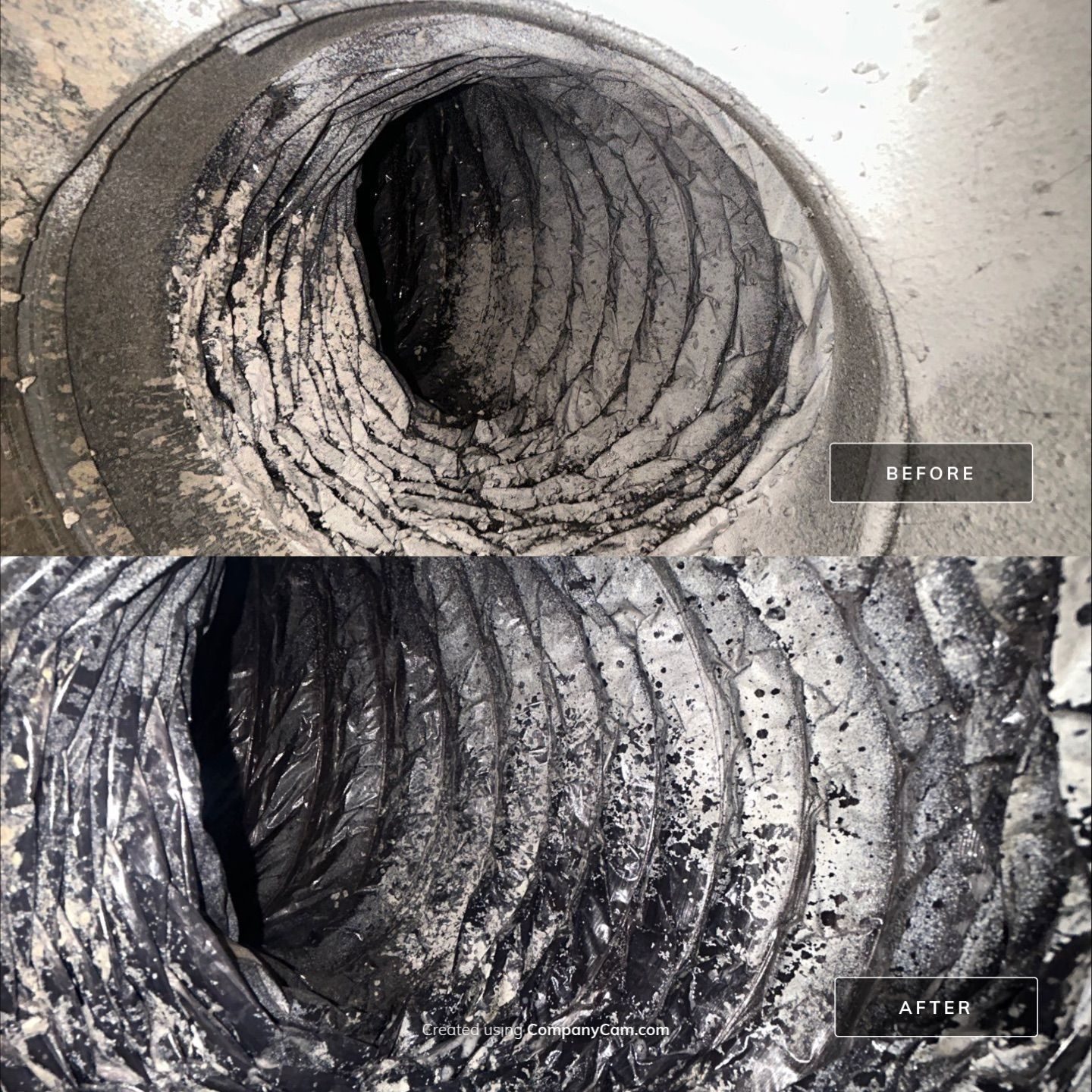
Do not forget the dryer vent
Dryer vents are not part of the HVAC ductwork, but they are cleaned on the same visit and they matter more for safety. The U.S. Fire Administration’s dryer safety flyer warns that skipping lint filter and dryer vent cleaning raises the risk of a dryer fire. If your dryer takes two cycles to dry a load or the laundry room gets hot, the vent is restricted. Once a year is a reasonable interval for most households.
How often should air ducts be cleaned in Atlanta’s climate?
Two local factors push homes here toward needing cleaning sooner than the national average. First, pollen. Metro Atlanta’s spring pollen counts are among the highest in the country, and a system running on a basic fiberglass filter pulls that pollen straight into the return. Second, humidity. Ducts routed through unconditioned attics and crawl spaces sweat in summer, and damp dust is where mold starts. If your home has flex duct in a vented crawl space, an inspection every two to three years is sensible even without symptoms.
Commercial buildings follow the same logic with higher stakes. Restaurants, medical offices and warehouses in Norcross, Duluth and Peachtree Corners run their systems many more hours per day, and NADCA recommends more frequent inspection for those occupancies. Our air duct and HVAC cleaning page covers both residential and commercial work.
Need help now? ATL Restoration answers 24/7 at (770) 744-1282. Inspections are free for homes and businesses across metro Atlanta. Learn more about our air duct and HVAC cleaning services or see every city we serve.
Frequently asked questions
How often should air ducts be cleaned in a typical home?
There is no fixed schedule that fits every house. The EPA recommends cleaning ducts as needed rather than routinely. In practice, many metro Atlanta homes benefit from an inspection every few years and a cleaning when it shows real buildup, after renovation dust, after a water or fire event, when a home has pets or allergy sufferers, or when you move into a house with unknown history.
Is air duct cleaning worth it?
It is worth it when there is something in the ducts to remove: visible dust and debris, mold confirmed by a professional, pest droppings, construction debris or smoke residue. It is not worth it as a routine ritual on clean ducts, and it will not fix a dust problem whose source is elsewhere. A good company shows you the inside of the ducts before recommending anything.
Does duct cleaning help with allergies?
It can reduce the amount of settled dust, pollen and pet dander that the system redistributes, which many allergy sufferers notice. The EPA cautions against companies that promise health cures, so think of it as removing a reservoir of irritants rather than a treatment. Pairing cleaning with a better filter and controlled humidity gives the biggest improvement.
How long does duct cleaning take?
A typical single-family home takes a few hours. Larger homes, homes with multiple systems and commercial buildings take longer. The work includes the supply and return ducts, registers and grilles, the plenums, and usually the blower and coil.
Should ducts be cleaned after a renovation?
Yes, if the system ran during the work or the registers were not sealed. Drywall dust and sawdust settle in duct runs and come back out for months. This is one of the clearest cases where cleaning pays off.
What does NADCA certification mean?
NADCA is the National Air Duct Cleaners Association. It publishes the ACR standard that defines how HVAC systems should be cleaned and verified. Our NADCA-certified technicians follow that standard on every job, including using source-removal methods and inspecting the system afterward.